Had a good meeting last night about the lake. I would break the information into three parts:
1. Overall status and pace: I would say that the information I heard last night is pretty early on. The Freedom Center’s business plan is very draft and the operating agreement is about 50% done with significant differences still to be worked out.
2. Money: The State will pay to install the ramp and parking lot. The Freedom Center will run the marina and hopefully cover their costs by charging access fees, etc.. Still unresolved is who exactly will pay to build the buildings, buy the cash regiseters, boats and all the other stuff one might need to run a marina? Also to be resolved is who covers the shortfall if the marina loses money? These are significant issues.
3. Do we need a marina? What do other people do? : There are a mix of solutions that localities use. In the NoVa area, the primary drinking water resource is the Potomac but in other areas of the state there are drinking water resevoirs that are primary sources but also have recreational uses. As one might expect, the level of control varies from full-on marinas to nothing at all to control access. I haven’t done a scientific survey but it would appear at first glance that the more rural areas do less to control this. Lake Manassas is located in one of the fastest growing Counties in the country.
In addition, our Utilities staff believes controlling access to the lake is very important to ensuring safe drinking water. For those of you who hand-wave away the opinion of those who currently ensure your water quality, we also requested and recieved, an opinion from Dr. Grizzard of Va. Tech. Dr. Grizzard is the Director of the Occoquan Watershed Monitoring Lab. This lab also runs the testing program for Lake Manassas. He indicates that he sees no problem with electric or manual boats as long as there is some control over what goes in and that any boats brought in be properly treated to eliminate non-native species infestations. Non-native (zebra mussel, etc) infestations cost a lot and are rarely completely eliminated – resulting in ongoing costs to the rate payers.
I believe that the parties currently working together to make this happen are pretty unique and I’m optimistic that something can happen but we’ll have to wait until they come back with plans that are a bit more fleshed out. The Utilities staff indicated that they will work to identify costs and possible sources of funding and bring the matter back in the early fall.
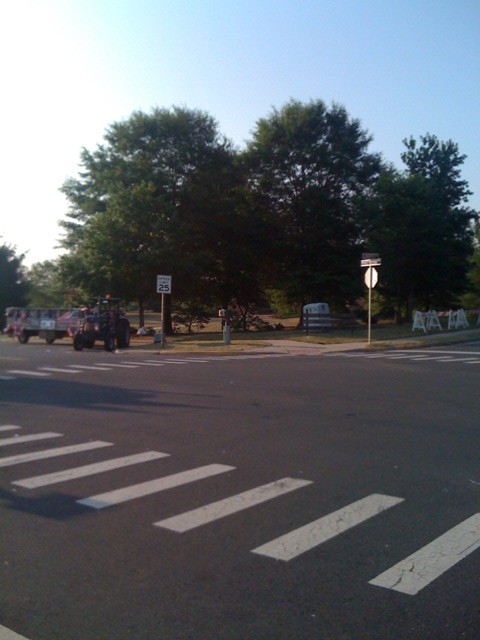 That intersection over there was empty this morning at 7:00 when I went through. It was packed with people last night. When I went though there this morning for a quick 25-mile ride, the only people around were from Public Works and they had the mess from last night pretty well in hand. I know I saw many of those same folks working yesterday afternoon to get the event setup. Thanks to those folks for their hard work.